Therapy with me moves parents from surviving to participating more fully in the life they already have: through greater courage, compassion and connection.
Welcome to Demelza Therapy
So much of parenting can feel like swimming upstream.
It's so easy to get exhausted from trying to keep from sinking, while we are yearning to actually enjoy being in the water with our children.
On the surface, we often look capable, as though we are swimming smoothly through life. We are thoughtful, conscientious parents who care deeply and are trying incredibly hard to get things right.
Yet underneath, there can be a lot of kicking hard against currents of anxiety, self-doubt, overwhelm, perfectionism, guilt, and a relentless pressure to be enough.
Parenthood can hold deeply joyful moments, the kind we try to capture on camera because we already know how quickly they pass, like bubbles on the breeze.
But it can also bring unexpectedly deep currents that ask more of us than we ever imagined.
Many parents are carrying feelings they rarely speak about.
The shame of losing their temper.
The resentment that can build when their own needs go unmet.
The fear that they are somehow getting it wrong, or struggling to keep up.
Therapy with me offers a space to set some of that down.
A space where these experiences can be spoken about openly, explored with curiosity, and met with compassion rather than judgement.
A space to understand the currents beneath the surface, and to discover that you are not alone in these waters.
You don't have to spend the rest of your life treading water, desperately trying to stay afloat.
Together, we can begin to understand the currents that keep pulling you under.
Not so that life becomes perfect, but so that there is more space for joy, connection, meaning, and those moments when it simply feels good to be in the water with the people you love.
Little by little, many parents find themselves moving from simply surviving to participating more fully in the life they already have.
Come swim with me.


My Approach
I am a mum too, swimming in these ever-changing waters alongside you.
There is no judgement here. I genuinely believe we are all doing the best we can with the resources available to us.
Therapy is definitely a place to bring the really hard stuff of life, but with me there is also laughter. We play with metaphors that sometimes get stretched too far, and we make space for the contradictory and impossible expectations that society can place on us.
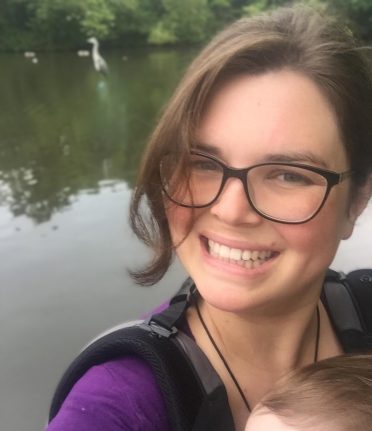
I believe many of the struggles we carry are shaped by the ways we learned to survive earlier in life, patterns that once helped us feel safe or manage expectations. Over time, these strategies can become outdated and begin to cause distress.
They can show up as thoughts we wish we did not have. Behaviours we wish we could stop. Feelings we wish would go away;
especially rage, resentment, and regret. These experiences can feel heavy, like rocks in a backpack as you try to keep swimming.
I will listen to your story, and try to tune into what life has felt like for you, not just what has happened, but what it has been like to live inside your story. I often slow things down so we can meet what is happening with empathy and curiosity, and begin to gently make sense of what might be going on beneath the surface.
I draw on psychodynamic, existential, humanistic, and body-based psychotherapy. This allows me to work flexibly, responding to the ebb and flow of life and what each person brings in the moment, rather than offering something fixed or formulaic.
This is an empathetic space where all of you matters: your childhood experiences, the way your body communicates, your relationships, your hopes, dreams, and deep values; all of you.
Courage, compassion, and connection with yourself can begin to grow here, because how we are with ourselves often shapes how we are with our children.
Therapy with me becomes a space where you do not have to keep fighting the current alone.

What happens when you stop waiting?
Many of the parents I work with come to therapy carrying a quiet sense that they are somehow falling short.
They are trying incredibly hard. Yet somewhere beneath the pressure, responsibility, and endless demands of family life, they often feel like they've lost part of themselves.
Therapy with me is not about becoming a perfect parent, or perfect anything for that matter.
It is about developing a more understanding and compassionate relationship with yourself, so that you can participate more fully in your own life with your family.
At first, the changes are often small.
A little more breathing room.
A little more hope.
Then something begins to shift.
You take annual leave and actually switch off.
You tell the truth when someone asks how you are.
You make biscuits with your children and find that you are enjoying yourself too.
You spend a day at the beach and realise there is more laughter than shouting.
You have dance parties in the kitchen as you wash up.
You trust yourself a little more.
You stop waiting for permission and put yourself forward for the opportunity.
You have confidence in the resources within you to repair the connection after an argument.
You notice beauty again, and give your self permission to pause and take it in.
Your sense of vitality expands, somehow its now possible to make space for rest, creativity, joy, and the things that bring you alive.
Children learn far more from what we embody than what we instruct.
When they see you resting, creating, laughing, repairing, expressing your needs, contributing in ways that matter to you, and trusting your own worth, they learn that these things are available to them too.
The ripples often travel further than we realise.
Over time, you may discover that you no longer need to wait until everything is done, everyone else is happy, and life is perfectly under control before you allow yourself to fully live.
You begin now.
About Me
Over the years, I have had the privilege of sitting alongside people facing some of life's most difficult experiences.
My work has taken me into prisons, bereavement services, schools, humanitarian organisations, and communities both in the UK and overseas.
Across these very different settings, I found myself returning to the same questions:
How do people find the courage to face life’s challenges without being worn down by them?
How do we grow a sense of belonging when life changes in ways we never expected?
And how do we stay open to life in all its fullness when the waters become rough?
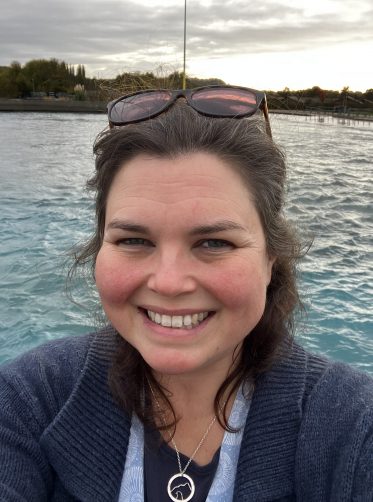
I was born in Africa, where I learnt to swim outdoors in the sunshine. The joy of fresh air and cold water has never left me. Wild swimming remains one of my favourite places to rest, reflect, and reconnect.
I moved to the UK as a child. Looking back, I think this early experience taught me something about transitions: how unsettling they can be, and how much possibility they can hold.
Perhaps that is one reason I have found myself repeatedly drawn to supporting people as they navigate change, loss, uncertainty, and new beginnings.
I trained as an Integrative Therapist at the Minster Centre in London and hold a Master’s degree in Social Development and a BA in International Development from the University of East Anglia.
Since qualifying, I have continued to develop my practice through specialist training in complex grief, child loss, therapeutic parenting, attachment, play therapy, psychological first aid, trauma debriefing, and online counselling. I continue to engage in ongoing professional development to support the depth and integrity of my work.
Throughout my career, I have worked with women experiencing trauma and child loss, bereaved children and young people, humanitarian aid workers returning from areas of conflict and disaster, and adults facing a wide range of life’s challenges.

These experiences have shaped how I understand resilience.
Alongside my therapy practice, I continue to provide psychological debriefing for Tearfund and CMS (Church Mission Society), supporting people as they navigate and integrate significant life experiences. This work has also informed my specialist birth debriefing service for parents who have experienced traumatic births.
These experiences have shaped how I understand resilience.
To me, resilience is not about avoiding the rocks ahead.
It is about trusting that we can find a way round them when they appear.
Becoming a parent has deepened this understanding further.
It has given me a lived appreciation of how quickly we can move between joy and overwhelm,
love and uncertainty, and how much courage it can take to just keep swimming.
Fees & Availability
I usually meet with clients weekly on Zoom.
Each session is £65 and lasts 50 minutes.
In our initial session we’ll talk about your story, what’s bringing you to therapy now, and how I can help.
We’ll also explore what you want from therapy. It may be a few sessions on a specific issue, or more ongoing support for your journey.
This initial session costs £90 and lasts an hour and a half.
However, if getting childcare cover for that length of time is a challenge we can spread this over two shorter sessions.

I usually meet with clients weekly on Zoom.
Each session is £65 and lasts 50 minutes.
In our initial session we’ll talk about your story, what’s bringing you to therapy now, and how I can help.
We’ll also explore what you want from therapy. It may be a few sessions on a specific issue, or more ongoing support for your journey.
This initial session costs £90 and lasts an hour and a half.
However, if getting childcare cover for that length of time is a challenge we can spread this over two shorter sessions.
Availability
I update this section regularly so you can see whether I currently have space for new clients.
Appointments are available online across the UK, primarily during school hours.
Current availability in July 2026 includes:
- Monday afternoons
- Tuesday mornings and afternoon
- Wednesday afternoons
If you're interested in ongoing therapy or Birth Debriefing, please get in touch to arrange a free 20-minute introductory call.
Contact Me

I am happy to discuss any queries or questions you may have prior to arranging an initial appointment. I offer a free 20 minute introductory call to give you a chance to ask any questions you might have, see if our diaries align and if we are a good fit.
Frequently Asked Questions
For many people therapy is a new experience and that can be anxiety inducing. Also different types of therapy can feel different, so here is a taster of what it’s like to work with me.
I begin each session with "So" giving you the chance to see what is bubbling up within you at that moment. I will tune into where you are that day, and hold the bigger narrative of your story and hopes for your life going forward. I don't set homework. I trust the process of our therapeutic relationship to be supportive and grow your self-awareness even between sessions.
Empathically I tune into my clients trying to get a real sense of their unique life experiences and how they responded to them. Often I get images and metaphors that come to mind. That often make my clients laugh as they say “Yes! That’s exactly it!” Expressing the joy of feeling really seen and understood. These pictorial places of connection can become a shorthand between us in future sessions. This can be a very playful and creative way of working that increases the sense of safety between us. Alternatively they suggest a different image and we work with that. It really is a team endeavour.
The main modalities I draw on are Psychodynamic, Existential, Humanistic and Body psychotherapy. But the joy of being an Integrative Therapist is that I have many more ingredients in my kitchen, and I can use them in different ways. Psychosynthesis, Gestalt, CBT etc. all offer different flavours. Figuring out the right pace of the work is also a skill and a joint piece of work. So my clients are always free to opt out of any suggestions I make and we regularly have reviews to assess how we feel it's going.
This flexibility enables me to create a bespoke therapy for each client.
So there’s your taster. If you’d like to know what it is to be really nourished.
According to the most recent research online therapy is as effective as in-person therapy. (Therapy Today BACP Journal April 2024). The most important factor is the relationship between the therapist and the client.
This is why I do a free telephone call with all my clients before we begin so we can see if we're a good fit. It makes sense to me that since issues often arise through difficult relationships, that a healing relationship where you feel really valued would be the place for restoration.
One difference between working in person and online is that there is no commute or prepared space for you to arrive at for your therapy. Therefore it's worth taking a moment to read over my guide and prepare yourself and your space for our work together.
View my guide here.
My aim is to respond to emails within 24 hours during week days. We will then set up a time for our introductory 20 minute call as soon as our diaries align.
Usually the introductory session will then happen within the week. Next, we would arrange for counselling sessions to take place at the same time every week.
Everything that is said within the counselling room is private - this is one of the main ways counselling and therapy differ from talking to a friend or relative. Once you are comfortable with the format of weekly sessions and the safe space they provide, you will find the freedom to speak in confidence is of great value.
I am registered member of the BACP (British Association of Counselling and Psychotherapy). Part of my commitment as an ethical professional involves attending regular supervision. During supervision I will use your first name only to protect client anonymity.
I take my GDPR commitments very seriously and am registered with the ICO. I give all my clients my privacy agreement and keep all records according to the guidance of the ICO (Information Commissioner's Office). If you have any concerns about how I handle your data, please contact me via email with the subject line with the subject line 'Data Complaint'. I will then acknowledge your complaint within 30 days.
Subsequently, if you want to make a formal complaint about the way I have processed your personal information you can contact the Information Commissioner’s Office: https://ico.org.uk/make-a-complaint/.
Note that there are some situations where you may be a risk to yourself or others, and there the law requires that I notify an authority; in these cases I may not be able to keep total confidentiality. Breaking confidentiality is very rare though, and ideally only happens after the person concerned has been informed.
Ideally counselling is a time for you to invest in yourself. This can be more challenging when there is another person in the room needing your attention.
However, we don’t live in an ideal world. So, if you need to bring babe-in-arms to our sessions, they are welcome.
Over the years, I have worked with people facing profound trauma, grief, and loss. I have also worked with people whose struggles might appear much smaller from the outside.
These experiences taught me that worth was never the thing being measured in the first place. Our worth comes from being alive. It is not something that has to be earned, proved, or measured. We are all worthy of love and belonging. One of the joys of my work is seeing people discover this afresh.
Many people arrive in therapy feeling that their problems are not serious enough. They compare themselves to others and conclude that they should be coping better, that other people need support more, or that their struggles are somehow too small to matter.
That's not my perspective.
I often think of people as precious stones lying beneath the water. Life happens, and over time the water can become clouded. Anxiety, overwhelm, self-doubt, perfectionism, guilt, grief, and painful experiences stir up the mud until it becomes difficult to see clearly.
Some people have had more mud stirred into their waters than others. Some have spent years swimming against stronger currents.
But the stone beneath remains equally precious.
One of the great privileges of this work is helping the water settle.
As the mud begins to clear, people often reconnect with qualities that were never lost, only hidden from view for a while.
Not becoming someone new.
Simply seeing themselves more clearly again.
Family issues do not have to passed on to the next generation.
Supporting your children to raise the next generation is a significant part of the journey.
Parenting today can feel very different to when you were raising your children.
Such shifts in culture and technology can lead to families fighting and struggling to value what the other generations have to offer.
If these kinds of challenges sound familiar, get in touch.
You don’t have the power to change your family, but you do have the power to change the way you connect with them.
You are never under pressure to continue counselling. When you begin to feel the work is drawing to an end, or if you don’t think it is working for you, I encourage you to discuss this with me as part of the counselling process. Rather than ending abruptly: it is best to have goodbye sessions where we can review our work; celebrate your achievements and plan how you can support yourself in the future.
If at any time I feel that counselling is no longer helpful or appropriate for you, I will discuss this with you.
As a BACP registered counsellor, I am bound by its Ethical Framework for Good Practice and am subject to its complaints procedure. Both are available on their website: www.bacp.co.uk. If you wish to make a complaint or raise a concern about my practice, please bring the issue to the sessions so we could talk about it together.